
Entry in Insurance When You Borrow Someone Else's Car
Whose Insurance Pays After an Accident in a Borrowed Car?
Discover how primary and secondary insurance interact when you crash a borrowed car, how permissive use operates, and why non-owner coverage protects your assets.

By Dana Whitlock · Staff Writer
Published
Answer in brief
When you operate a borrowed vehicle with the owner's permission, the owner's personal auto insurance generally acts as primary coverage for third-party damages. If an accident results in bodily injury or property damage exceeding the owner's liability limits, your named non-owner policy serves as secondary coverage to absorb the excess loss. Without non-owner insurance, you remain personally liable for any remaining costs out of pocket.
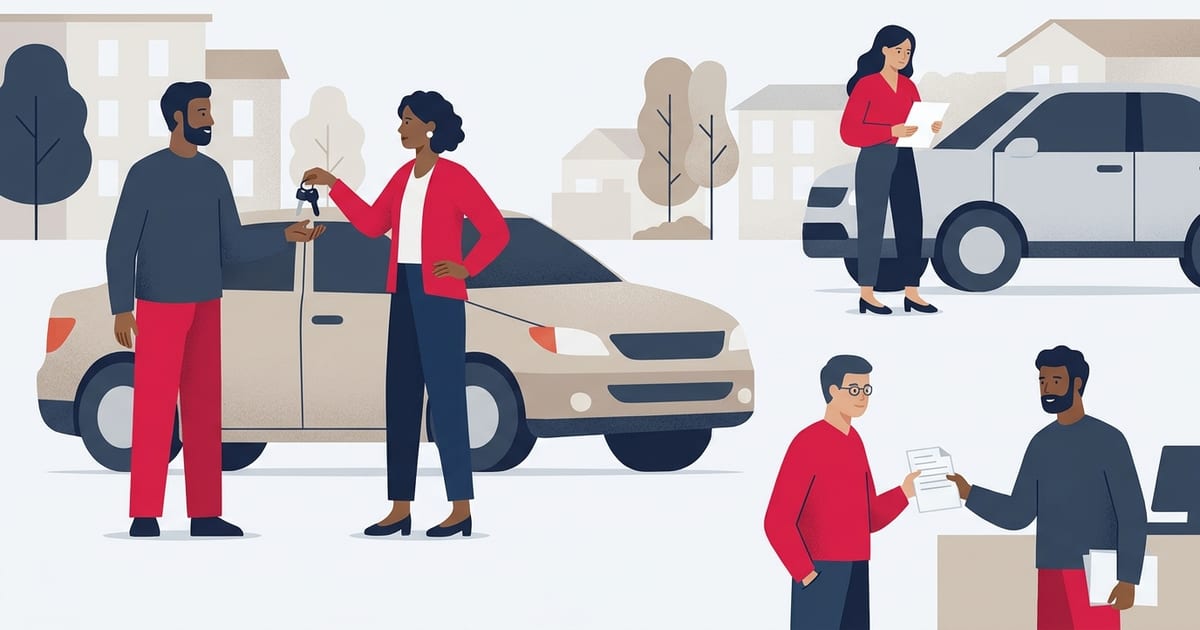
How Insurance Follows the Vehicle and the Driver
A foundational tenet of automobile insurance in the United States is that insurance primarily follows the vehicle rather than the driver. When you borrow a vehicle with the explicit consent of the owner, the doctrine of permissive use generally extends the owner's policy protections to you. However, assuming that an owner's policy will shield you against all potential liabilities is a common and dangerous misconception.
The owner's policy functions as the primary layer of financial defense, meaning it pays first when a crash occurs. But if you cause a severe accident resulting in substantial bodily injury or property damage that exhausts the owner's policy limits, the injured parties will pursue you directly as the at-fault operator. This is precisely where a named non-owner policy steps in: it provides vital secondary coverage, paying excess third-party claims up to your individual policy limits.
Primary vs. Secondary Liability: How Claims Settle
| Claim Layer | Responding Policy | Coverage Role | Driver Exposure |
|---|---|---|---|
| Layer 1: Initial Third-Party Damages | Vehicle Owner's Auto Policy (Primary) | Pays third-party bodily injury and property damage up to the vehicle's statutory limits. | None, provided total claims do not exceed the vehicle owner's liability limits. |
| Layer 2: Excess Third-Party Liability | Borrower's Non-Owner Policy (Secondary) | Absorbs unpaid bodily injury and property damage expenses after primary limits exhaust. | None, provided excess claims fall within the non-owner liability limits. |
| Layer 3: Uninsured Excess Losses | Driver's Personal Assets | Applies when damages exceed the combined limits of both primary and secondary policies. | High financial exposure; driver is personally responsible for unpaid judgments. |
| Physical Damage to Borrowed Car | Vehicle Owner's Collision Coverage | Pays for vehicle repair or cash value subject to the owner's policy deductible. | Non-owner policies never cover vehicle damage; borrower may owe deductible to owner. |
The Risk of Low State Limits and Uninsured Motorists
According to the Insurance Information Institute, state financial responsibility minimums serve merely as a legal floor rather than an adequate financial shelter. Data compiled by the Highway Loss Data Institute highlights that vehicle accidents regularly produce significant claim severity under bodily injury and property damage coverages. Modern vehicle repair technologies and medical expenses routinely surpass minimal coverage limits during multi-vehicle collisions.
Uninsured driving rates across the nation compound this hazard. Research from the Insurance Information Institute shows that in 2023, the estimated percentage of uninsured motorists stood at 28.2 percent in Mississippi, 24.1 percent in New Mexico, 23.1 percent in the District of Columbia, 22.3 percent in Michigan, 20.6 percent in Florida, 20.4 percent in California, and 14.5 percent in Texas, with Maine recording the lowest rate at 5.7 percent. Furthermore, the National Association of Insurance Commissioners documented a countrywide average auto insurance expenditure of $1,281 in 2023, reflecting a 13.98 percent increase over the prior year. If you borrow a car and collide with an uninsured driver, or cause damages exceeding baseline policies, secondary coverage protects your finances from catastrophic liability.
Steps to Take Following a Crash in a Borrowed Vehicle
- 1
Prioritize Safety and Secure Documentation
Verify passenger well-being, summon emergency responders to generate a formal crash report, and photograph vehicle damage and scene details thoroughly.
- 2
Notify the Vehicle Owner Without Delay
Furnish the vehicle owner with complete collision details so they can initiate a claim with their insurer, establishing the primary claim record.
- 3
Alert Your Non-Owner Insurance Carrier
Contact your non-owner insurance provider to document the incident, ensuring your secondary coverage is active if primary liability thresholds are exceeded.
- 4
Coordinate with Insurance Adjusters
Provide objective facts to insurance adjusters handling the investigation, allowing primary and secondary carriers to establish settlement order.
Coverage Boundaries: What Non-Owner Policies Exclude
Drivers must recognize that a named non-owner policy provides only liability coverage—specifically third-party bodily injury and property damage protection. As outlined by the Insurance Information Institute, standard basic auto policies separate liability from physical damage coverages like collision and comprehensive. A non-owner policy will never pay to repair the car you were driving. If you damage a borrowed vehicle, the owner must rely on their own collision coverage, leaving you potentially responsible for reimbursing their deductible.
Maintaining a named non-owner policy also delivers long-term financial advantages beyond individual borrowing scenarios. By preserving continuous coverage, you avoid a coverage gap in your insurance history. Insurers frequently assign higher premium classifications to motorists who have experienced a lapse in coverage. Keeping a non-owner policy active ensures you qualify for standard tier pricing when you eventually purchase a vehicle of your own.
Questions & answers
Whose insurance pays first if I cause an accident in a borrowed car?
The car owner's auto insurance policy is primary and pays first under permissive use rules. If the damages exceed the owner's liability limits, your named non-owner policy serves as secondary coverage to pay the excess.
Will a non-owner policy cover damage to the borrowed car itself?
No. Non-owner policies provide third-party liability coverage only. They do not include collision or comprehensive coverage and will not pay to repair the borrowed car.
Can I use non-owner insurance to drive a car owned by my roommate?
No. Non-owner policies contain a regular-use exclusion that denies coverage for vehicles owned by household members or vehicles provided for your frequent, regular use.
What happens if damages exceed both the car owner's limits and my non-owner limits?
Once both the primary vehicle policy and your secondary non-owner policy limits are completely exhausted, you become personally liable for any remaining judgments, medical expenses, or property damages.
Terms: Permissive use, Secondary (excess) coverage, Regular-use exclusion, Liability limits, Coverage gap (lapse)
Sources and references
Legal figures on this page (minimum limits, filing periods, statutory benefits) are checked against the primary law or the state insurance regulator listed below. Links and figures last verified Nov 2026.
- Estimated percentage of uninsured motorists by state, 2017–2023 — Insurance Information Institute (2025)Statistical dataIRC time series by state; 2023: Mississippi 28.2%, New Mexico 24.1%, D.C. 23.1%, Michigan 22.3%, Florida 20.6%, California 20.4%, Texas 14.5%; lowest Maine 5.7%.
- 2019–2023 Auto Insurance Database: average premium supplement — National Association of Insurance Commissioners (2025)Statistical dataCountrywide average expenditure $1,281 in 2023 (+13.98%); combined average premium $1,438; state tables for liability, collision and comprehensive.
- Insurance losses by make and model — Highway Loss Data InstituteStatistical dataRelative claim frequency and severity by vehicle under collision, property damage, comprehensive, PIP, MedPay and bodily injury coverages.
- Automobile financial responsibility limits by state — Insurance Information Institute (2023)Statistical dataCompulsory coverages and minimum liability limits by state (table dated December 2023 — several states have raised limits since; see statute entries).
- What is covered by a basic auto insurance policy? — Insurance Information InstituteConsumer guidanceDefines bodily injury and property damage liability, MedPay, PIP, uninsured/underinsured motorist, collision, comprehensive and glass coverage.
- How much auto coverage do I need? — Insurance Information InstituteConsumer guidanceWhy state minimums are a floor; choosing liability limits that protect assets; when collision and comprehensive are worth keeping.
- Is it legal to drive without insurance? — Insurance Information InstituteConsumer guidanceEvery state requires drivers to demonstrate financial responsibility; in most states insurance is the mandatory way to do so.
- How to file an auto insurance claim — Insurance Information InstituteConsumer guidanceSteps after a crash: document the scene, notify the insurer promptly, understand the adjuster's role.
Practical guidance on this page is original editorial work. Cited sources support factual statements and do not endorse this site. Dollar ranges described as typical or illustrative are editorial estimates, not figures from these sources.